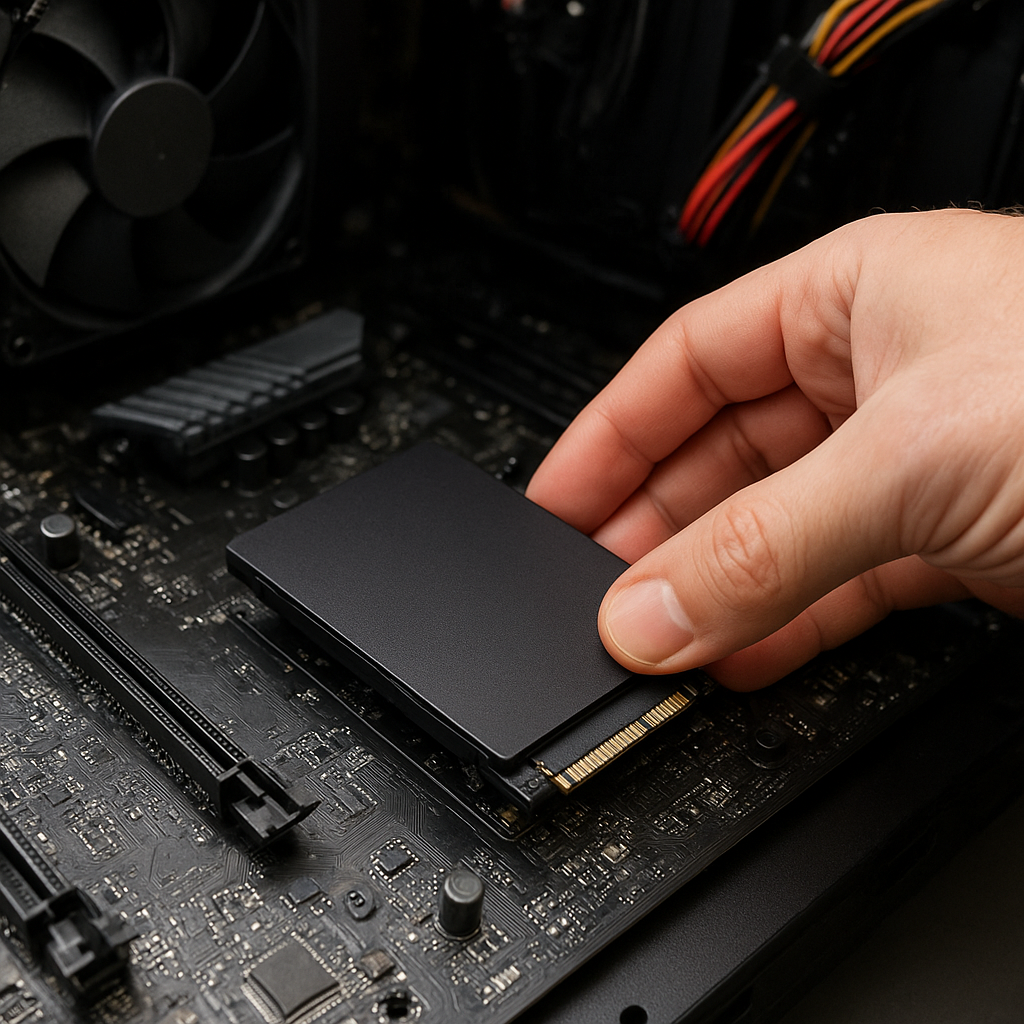
Resolving the Issue of an SSD Not Showing Up in Devices and Drives
Modern computing setups rarely depend on a single storage unit anymore. Users routinely pair a primary boot drive with additional modules for backups, media libraries, or project archives. Yet, a frequent frustration occurs when the system completely ignores the newly installed hardware. The problem typically stems from uninitialized partitions, missing drive letters, or firmware conflicts rather than permanent hardware failure. Understanding how operating systems enumerate storage helps narrow down the exact bottleneck.
New drives often arrive with raw, unallocated space. The file explorer remains blank until a partition table gets created and a drive letter gets assigned. Disk management utilities handle this translation layer, converting physical silicon into recognizable volumes. When the enumeration process stalls, the hardware sits idle in the background.
- Verify initialization status through system utilities
- Check partition alignment against current boot configuration
- Manually assign an unused drive letter to unallocated space
- Update storage controller drivers through official portals
Storage controllers act as interpreters between raw hardware and the operating system. When communication breaks down, the physical drive exists but remains functionally invisible.
Why a SATA SSD Is Not Showing Up in Standard Builds
Legacy connection standards still power countless desktop configurations. The serial interface demands both a dedicated data cable and a direct power connector from the power supply unit. A loose ribbon, damaged motherboard header, or disabled AHCI mode in firmware settings will instantly hide the hardware from view. Cross-checking cable integrity and port functionality eliminates basic wiring faults. Firmware menus occassionally prioritize newer protocols, leaving older connections dormant until manually reactivated.
| Connection Fault | Observable Symptom | Immediate Fix |
| Unseated data cable | Drive missing in firmware | Reseat firmly until audible click |
| Missing power lead | No indicator illumination | Attach dedicated power connector |
| AHCI mode disabled | Slow boot sequences | Toggle setting in UEFI menu |
When the SSD Card Is Not Showing Up in Expansion Lanes
Compact form factors frequently get labeled as expansion cards during casual troubleshooting sessions. These modules plug directly into motherboard lanes without external wiring. Lane conflicts represent a common culprit. Installing a secondary module can disable specific PCIe slots or override SATA ports, depending on the board architecture. Reading manufacturer documentation clarifies which lanes remain active during multi-drive configurations. Poor seating or thermal paste interference rarely cause complete invisibility, but incorrect insertion depth absolutely does.
Systematic Verification When an SSD Is Not Showing Up on PC
A structured approach prevents unnecessary component replacements. Begin with firmware recognition, proceed to driver verification, and finish with cross-platform testing when possible. External enclosures serve as excellent diagnostic workarounds for isolating internal connection faults. Firmware patches frequently address known controller bugs, while clean driver installations remove corrupted registry entries that block storage enumeration. The process demands patience but rarely requires advanced engineering credentials. For comprehensive motherboard specifications and lane mapping charts, consult official documentation at Intel Support Hub. Driver compatibility matrices are maintained at Tom’s Hardware Storage Division. Historical reference material: Source: bbc.com
Storage technology transitioned from mechanical platters spinning at thousands of revolutions per minute to solid-state arrays with zero moving components. Early users dealt with audible grinding, seek-time delays, and fragmentation slowdowns. Modern arrays deliver near-instant access, yet the fundamental challenge of making hardware communicate with software persists unchanged. The shift from parallel ribbon cables to serial lanes, and eventually to direct motherboard mounting, simplified physical installation while increasing reliance on firmware configuration. Understanding these historical shifts explains why todays invisible drives require software-level interventions rather than physical adjustments. The troubleshootin routine remains straightforward once the underlying architecture gets recognized.